
Online Degree Myths You Should Stop Believing in 2026
If you’ve ever considered pursuing an online degree but hesitated because of something you’ve heard, you’re not alone. Many students and working professionals still believe outdated information that prevents them from taking the next step in their education. These online degree myths often create unnecessary confusion about quality, recognition, career opportunities, and learning experience.
The truth is that online higher education in India has evolved significantly over the past few years. Today, many universities offer industry-relevant programs, interactive learning platforms, experienced faculty, and recognised qualifications that help learners build successful careers.
Whether you’re a fresh graduate, a professional looking to upskill, or someone planning a career change, an online degree can offer the flexibility and support you need. However, before making a decision, it’s important to separate facts from fiction.
Understanding the reality behind common misconceptions can help you make an informed choice about your education and future. Marwadi University Online is Gujarat’s top university with NAAC A+ grade, NBA Tier-1 programs, Top 100-125 NIRF rank, 353 QS Asia rank and is also awarded the Centre of Excellence by Govt. of Gujarat.
In this blog, we’ll debunk the most common online degree myths, explain what students should really know in 2026, and help you confidently decide whether online learning is the right path for your personal and professional goals.
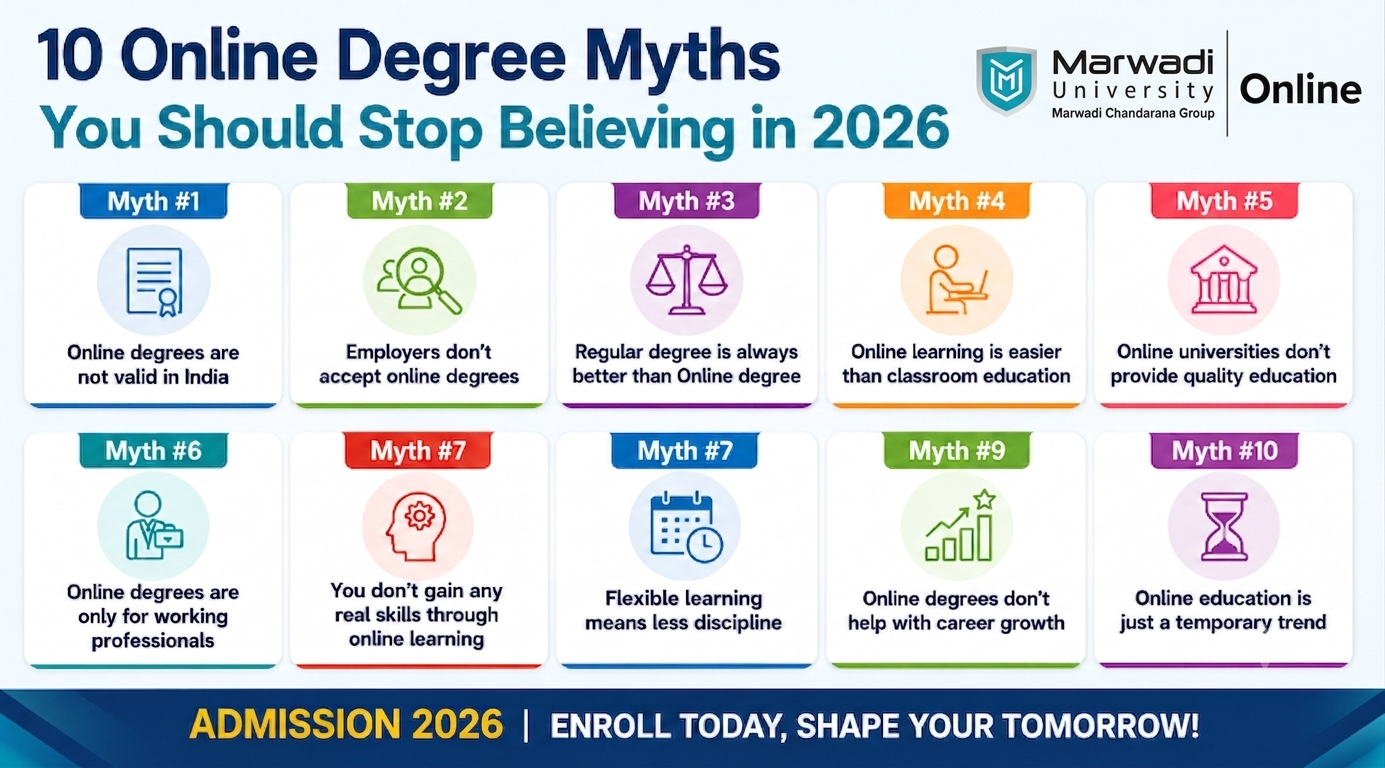
10 Online Degree Myths Debunked
1. Myth: Online degrees are not valid in India.
Reality:
One of the biggest concerns among students is online degree validity in India. The reality is that degrees offered by universities approved by the appropriate regulatory bodies are valid and recognised.
When choosing an online program, always ensure that the university offers a UGC approved online degree. Such degrees are accepted for higher education and are recognised by many employers across industries.
Remember:
- Always verify the university’s approvals before applying.
- Recognition matters more than the mode of learning.
2. Myth: Employers don’t accept online degrees.
Reality:
Many students ask, “Are online degrees recognized by employers?“ The answer is yes, provided the degree is from a recognised university and you possess the right skills.
Today’s recruiters often evaluate candidates based on:
- Skills
- Practical knowledge
- Certifications
- Communication abilities
- Relevant experience
The mode of education is only one part of your profile.
3. Myth: Regular degree is always better than Online degree.
Reality:
The debate around online degree vs regular degree is common, but there isn’t a universal answer for this.
A regular degree may suit students who prefer a traditional classroom experience, while an online degree is ideal for learners seeking flexibility without compromising on quality.
The right choice depends on:
- Your career goals
- Learning style
- Schedule
- Financial situation
What matters most is how effectively you use the knowledge you gain.
4. Myth: Online learning is easier than classroom education.
Reality:
This is one of the most common online learning misconceptions.
Online education requires:
- Self-discipline
- Time management
- Consistent participation
- Assignment completion
- Independent learning
Students who stay committed often develop valuable skills like accountability, problem-solving, and digital collaboration.
5. Myth: Online universities don’t provide quality education.
Reality:
Many online university myths stem from outdated perceptions.
Today’s online universities offer:
- Live interactive classes
- Recorded lectures
- Experienced faculty
- Digital libraries
- Discussion forums
- Continuous assessments
- Career guidance
The learning experience has become far more engaging than many people expect.
6. Myth: Online degrees are only for working professionals.
Reality:
While an online degree for working professionals is a popular choice, these programs are equally suitable for:
- Fresh graduates
- Entrepreneurs
- Homemakers
- Career changers
- Individuals preparing for competitive exams
Anyone looking for flexibility while continuing other commitments can benefit from online education.
7. Myth: You don’t gain any real skills through online learning.
Reality:
A good online degree focuses on practical and career-oriented learning.
Students develop:
- Industry knowledge
- Digital communication skills
- Research abilities
- Critical thinking
- Presentation skills
- Collaboration using online tools
These are highly valued by employers in today’s digital workplace.
8. Myth: Flexible learning means less discipline.
Reality:
One of the biggest benefits of online degree programs is flexible online learning, but flexibility does not mean a lack of structure.
Students still follow:
- Academic calendars
- Assignment deadlines
- Exams
- Project submissions
Flexibility simply allows learners to study at times that best fit their schedule while maintaining academic standards.
9. Myth: Online degrees don’t help with career growth.
Reality:
Many learners pursue online education specifically to:
- Upskill
- Earn promotions
- Switch careers
- Gain specialised knowledge
- Improve employability
Combined with practical skills and continuous learning, an online degree can become a valuable step toward long-term career growth.
10. Myth: Online education is just a temporary trend.
Reality:
The demand for online higher education in India continues to grow as learners seek accessible and flexible education options.
Advancements in technology, digital learning platforms, and employer acceptance have made online education a permanent part of modern higher education.
Rather than replacing traditional education, online learning expands opportunities for students from different backgrounds and life stages.
Final Thoughts
Believing outdated information can prevent students from making life-changing educational decisions. These online degree myths often discourage learners from exploring opportunities that could help them gain new skills, advance their careers, or pursue higher education on their own terms.
The reality is that online education has transformed significantly. Today, recognised universities offer high-quality academic programs, experienced faculty, interactive learning experiences, and strong student support. Whether you’re a recent graduate, a working professional, or someone planning a career transition, an online degree provides the flexibility to learn without putting your life on hold.
The key is to choose a recognised institution, verify that it offers a UGC approved online degree, and stay committed throughout your learning journey. Success ultimately depends on your dedication, continuous skill development, and willingness to apply what you learn.
As online education continues to grow, students who look beyond these online degree myths will be better positioned to embrace lifelong learning and prepare for the opportunities of tomorrow. Make your decision based on facts instead of misconceptions and take the next step toward achieving your academic and career goals.
FAQs
1. Are online degrees recognized in India?
Yes. Degrees offered by recognised universities that comply with applicable regulations are valid and widely accepted for higher education and many employment opportunities.
2. Is an online degree as valuable as a regular degree?
The value depends on the university, curriculum, and the skills you develop. A recognised online degree can offer excellent career opportunities.
3. Who should pursue an online degree?
Online degrees are suitable for students, working professionals, entrepreneurs, homemakers, and anyone looking for flexible learning.
4. What are the biggest benefits of an online degree?
Some key benefits include flexibility, accessibility, affordability, career-focused learning, and the ability to balance education with other commitments.
5. How can I choose the right online university?
Look for a recognised university, review the curriculum, check faculty expertise, evaluate student support services, and ensure the program aligns with your career goals.