
Online Education in India: How Online Degrees Are Driving the Next Education Revolution
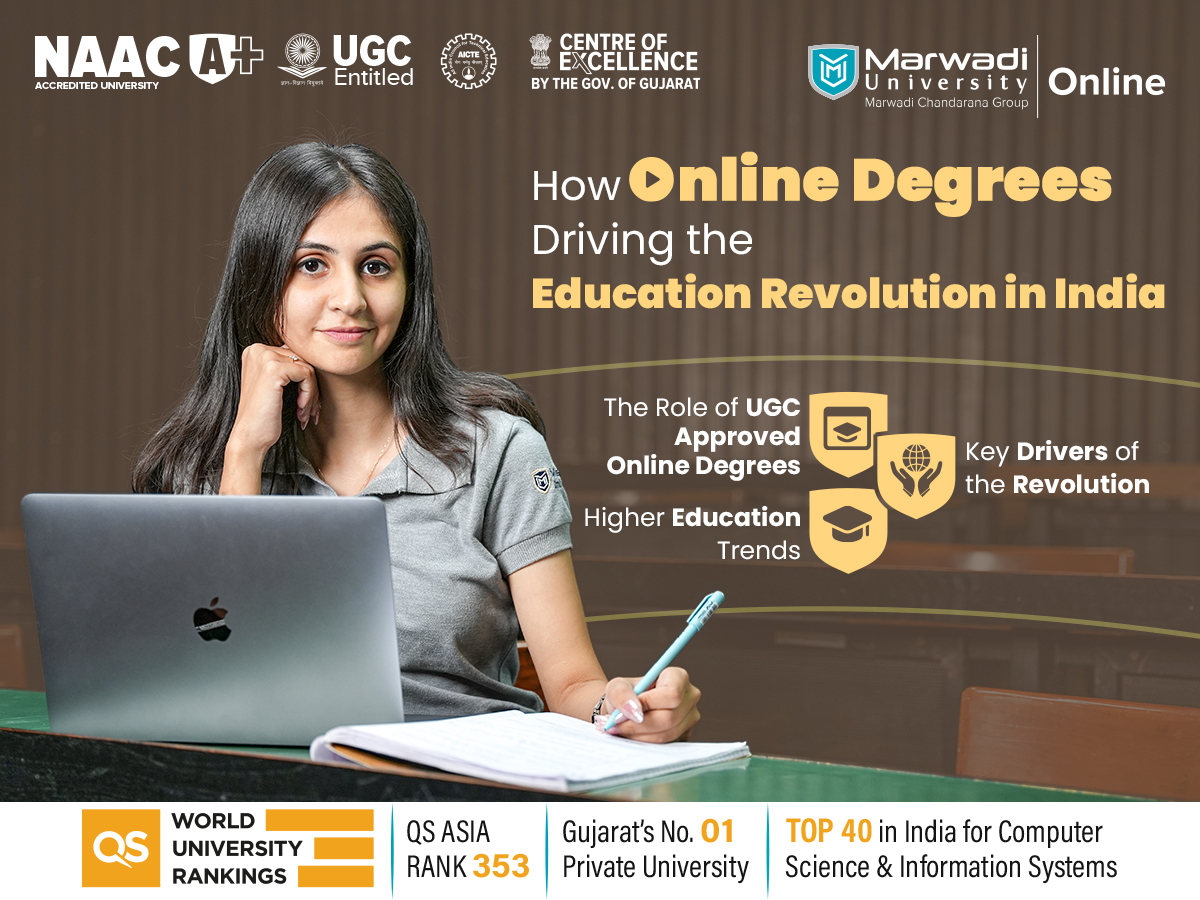
The landscape of online education in India is changing faster than ever before. What was once seen as an alternative learning option has now become a major part of the country’s higher education system. Students today are looking for learning opportunities that are flexible, affordable, career-focused, and accessible from anywhere. This shift has led to the rapid growth of online degrees in India, making digital education one of the biggest transformations in the academic world.
With technology becoming a part of everyday life, students no longer want education limited to physical classrooms. They want learning that fits their schedules, supports their career goals, and helps them stay future-ready. This is why the demand for UGC approved online degrees and modern digital programs is increasing across India.
From working professionals to fresh school graduates, learners are now choosing online programs for convenience, flexibility, and career growth. As part of the evolving future of higher education, universities are also adapting by offering industry-relevant courses, virtual classrooms, and skill-based learning experiences. In many ways, online learning is not just changing education, it is driving the next education revolution in India.
Marwadi University Online is emerging as one of the top online university in India with NAAC A+ accreditation, NBA Tier-1 programs, 353 QS Asia ranking and Center of Excellence award by Govt. of Gujarat.
Why Online Education Is Growing Rapidly in India
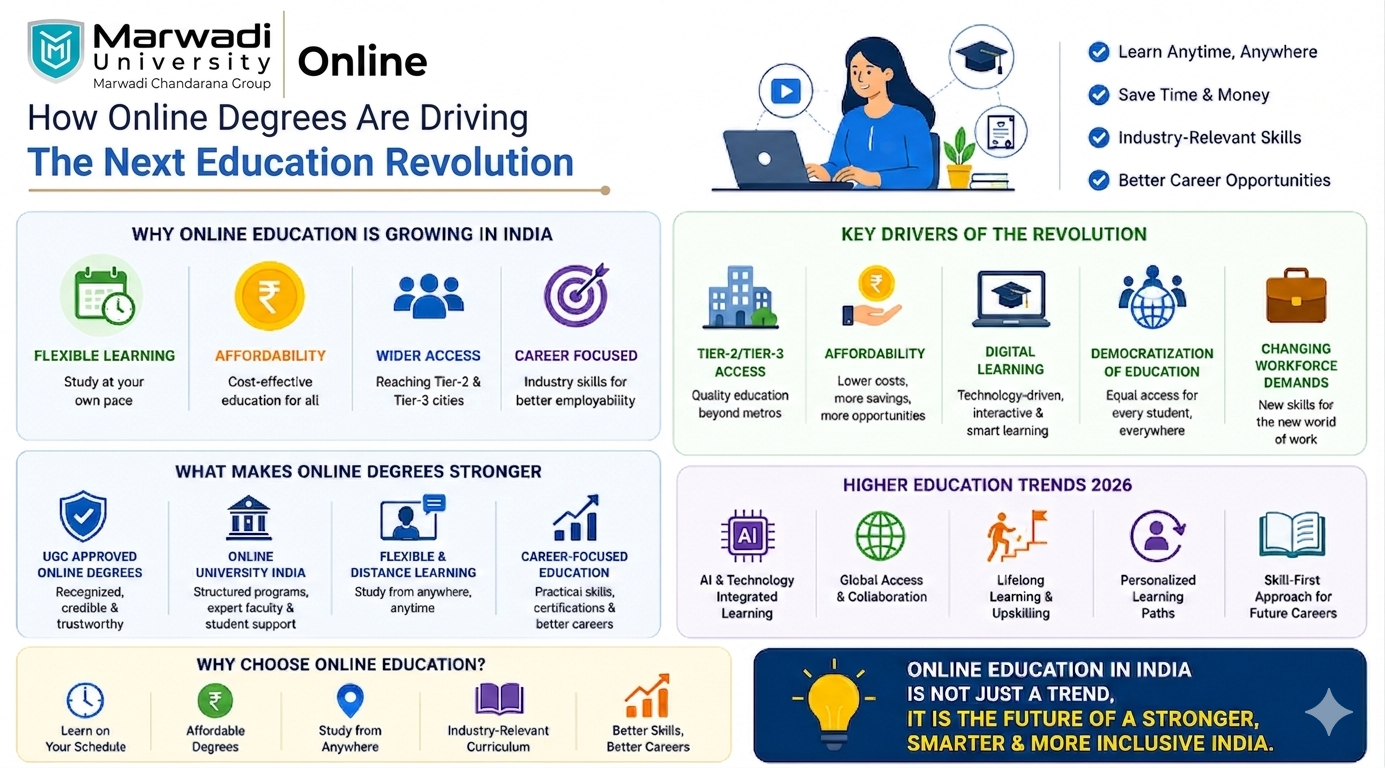
The rise of digital learning in India is being driven by changing student expectations and technological growth. Internet access, affordable smartphones, and digital platforms have made quality education more accessible to students across cities and rural areas alike.
One of the biggest reasons behind this growth is flexibility. Students can now attend lectures, submit assignments, and learn from expert faculty without relocating or leaving their jobs. This model of flexible learning is especially useful for working professionals and students balancing multiple responsibilities.
Another major factor is affordability. Compared to traditional campus programs, many online courses offer lower tuition fees and reduced living expenses. This makes affordable online degrees a practical option for many Indian families.
Expanding Access to Tier-2 and Tier-3 Cities
One of the biggest advantages of online education is its ability to reach students beyond metro cities. Students from Tier-2 and Tier-3 cities now have access to quality higher education without relocating to another city. Through online learning platforms, learners can attend lectures, interact with faculty, and access study materials from anywhere. This has significantly increased educational opportunities for students across India and is helping reduce the urban-rural education gap.
Democratization of Education Through Online Learning
Online education is playing a major role in the democratization of education by making learning opportunities available to students from different backgrounds, locations, and economic groups. Earlier, access to quality education was often limited by geography or financial limitations. Today, online platforms are helping remove these barriers and giving students equal opportunities to learn, grow, and build successful careers regardless of where they live.
Online Degrees Are Redefining the Future of Higher Education
The future of higher education is becoming more skill-oriented, technology-driven, and student-centric. Traditional learning models are slowly evolving into digital ecosystems where learning is available anytime and anywhere.
Today’s students are more focused on career outcomes than just earning a degree. Universities are responding to this shift by offering programs that combine academic knowledge with practical industry skills. This approach supports career-focused education, helping students become more employable in competitive industries.
Online learning is also encouraging lifelong education. Professionals can upgrade their skills through certifications, postgraduate programs, and online degrees without interrupting their careers. This adaptability is becoming one of the biggest strengths of online education.
The Role of UGC Approved Online Degrees
One of the biggest changes in the online education sector has been the growing acceptance of UGC approved online degrees. Earlier, many students were unsure about the value and credibility of online programs. Today, government recognition and improved academic quality have increased trust in online learning.
A recognized online university India offers structured curriculums, qualified faculty, virtual learning support, and industry-relevant training. Many companies now focus more on skills and knowledge rather than the mode of education, especially when students have practical expertise and certifications.
This recognition is helping online education become a mainstream choice rather than just an alternative option.
How Technology Is Transforming Digital Learning in India
Technology is at the heart of the online education revolution. Modern learning platforms now offer:
- live interactive classes
- recorded lectures
- AI-powered learning tools
- virtual assessments
- online discussion forums
- digital libraries
These innovations are improving student engagement and making learning more personalized. As higher education trends 2026 continue to evolve, universities are expected to integrate even more advanced technologies into their teaching methods.
Artificial intelligence, virtual labs, and data-driven learning systems are already changing how students learn and interact with educational content. This shift is making education more accessible, efficient, and future-ready.
Why Students Prefer Flexible and Distance Learning Options
The popularity of distance learning in India has increased because students want education that adapts to their lifestyles. Unlike traditional programs, online learning allows students to study at their own pace and from any location.
This flexibility benefits:
- working professionals
- entrepreneurs
- parents
- students preparing for competitive exams
- learners from remote areas
The ability to learn without geographical limitations has made online education one of the most inclusive learning models in the country.
At the same time, universities are improving student support systems through mentorship programs, career guidance, and virtual networking opportunities. This creates a more engaging learning experience for online students.
Career-Focused Education Is Becoming the New Priority
One of the strongest higher education trends 2026 is the growing importance of employability. Students are no longer choosing degrees based only on popularity. They want programs that lead to real career opportunities.
This has increased the demand for career-focused education in areas such as:
- business management
- computer applications
- digital marketing
- data analytics
- finance
- cybersecurity
Online universities are now partnering with industries to offer practical projects, certifications, internships, and skill-based training. These initiatives help students become job-ready in a rapidly changing employment market.
The Future of Online Education in India
The future looks promising for online education in India. As technology continues to improve and more universities invest in digital infrastructure, online learning is expected to become even more advanced and accessible.
Students today value flexibility, affordability, and practical learning. Online education successfully combines all these elements while opening opportunities for learners across different backgrounds.
The next generation of education will not be limited by classrooms or geography. Instead, it will focus on accessibility, innovation, and lifelong learning. Online degrees are no longer just a trend, they are becoming a major force shaping the future of education in India.
Final Thought
The growth of online education in India is creating a major transformation in the country’s academic landscape. From flexible schedules to affordable programs and career-oriented learning, online education is helping students access opportunities that were once limited by location, cost, or time.
As the demand for online degrees in India continues to grow, universities are adapting to meet the expectations of modern learners. Technology-driven classrooms, industry-focused curriculums, and skill-based education models are redefining how students prepare for their futures.
The increasing acceptance of UGC approved online degrees is also helping build trust and credibility in digital learning. Students now have more freedom to choose programs that align with their personal goals, professional ambitions, and learning preferences.
Looking ahead, the future of higher education will be more flexible, accessible, and digitally connected than ever before. Online learning is no longer just an alternative option, it is becoming the foundation of the next education revolution. For students seeking quality, convenience, and career growth, online education is opening doors to a smarter and more inclusive future.
FAQs
1. Are online degrees valid in India?
Yes, UGC approved online degrees are valid and recognized in India.
2. Why is online education becoming popular in India?
Online learning offers flexibility, affordability, and easy access to quality education.
3. Can online degrees help students get jobs?
Yes, many online programs now focus on industry skills and career-focused education.
4. What are the benefits of flexible learning?
Flexible learning allows students to study anytime and balance education with work or personal commitments.
5. What is the future of online education in India?
The future of online education in India is expected to grow with advanced technology, skill-based learning, and wider accessibility.