
Future of Higher Education: Why Students Are Moving Beyond Traditional College Models in 2026
The future of higher education is changing faster than ever before. In 2026, students are no longer looking at education the same way previous generations did. A traditional classroom, fixed schedules, and theory-heavy learning are no longer enough for many learners. Today’s students want flexibility, practical skills, career opportunities, and learning experiences that match the fast-changing world around them.
The rise of the modern education system has created new ways of learning that are more student-focused and career-oriented. From virtual classrooms to industry certifications and online degrees, education is becoming more accessible, personalized, and skill-driven. Students now prefer learning models that help them balance studies, work, internships, freelancing, and personal growth together.
Another major reason behind this shift is changing industry demands. Employers today value practical knowledge, adaptability, communication skills, and digital expertise more than just academic scores. This is why skill-based education and career-focused education are becoming more important than ever.
Marwadi University Online is one such modern institution that has NAAC A+ grade, NBA Tier-1 programs, 353 QS Asia rank, Top 100-150 NIRF rank and holds Centre of Excellence award by Govt. of Gujarat.
As technology continues to transform industries, students are actively exploring UGC approved online degrees in India that prepare them for real-world careers and future opportunities.
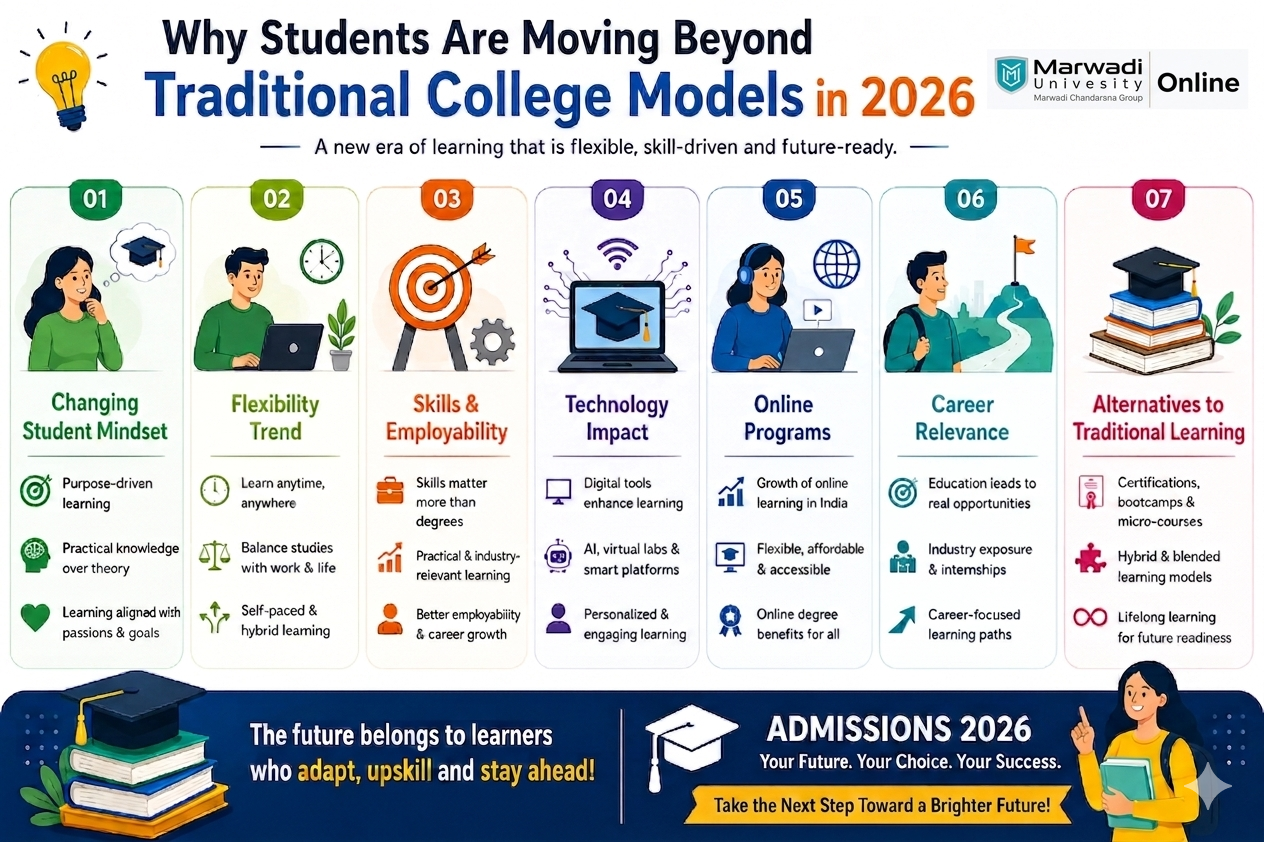
Changing Student Mindset
One of the biggest reasons behind the changing future of college education is the shift in student mindset. Today’s generation wants education that is flexible, practical, and meaningful. Students are no longer satisfied with learning only from textbooks or attending long classroom lectures without real-world application.
Modern learners want experiences that help them grow professionally and personally. They are looking for courses that improve their employability, digital skills, communication, and industry exposure. These changing Gen Z learning preferences are encouraging universities to rethink how education is delivered.
Students also want more control over their learning journey. They prefer personalized learning paths, shorter durations, internships, and project-based learning that align with their career goals.
Flexibility Trend
The demand for flexible learning is one of the strongest trends shaping higher education in 2026. Students today want the freedom to learn anytime and from anywhere. Many learners are balancing studies with internships, part-time jobs, freelance work, or entrepreneurship.
Flexible education models allow students to study at their own pace while managing other responsibilities. This is especially important for working professionals and students living in Tier-2 and Tier-3 cities.
The popularity of remote and hybrid work cultures has also influenced education choices. Students now expect learning systems to offer the same flexibility that modern workplaces provide. This is why universities are increasingly adopting digital platforms, recorded lectures, online assessments, and virtual collaboration tools.
Skills & Employability
Employers today are focusing more on skills than just degrees. This has increased the importance of skill-based education across universities and online platforms. Students understand that having practical skills can improve their career opportunities and help them stay competitive in the job market.
Industries are looking for graduates who can solve problems, communicate effectively, adapt to change, and work with modern technologies. As a result, students are choosing programs that combine academics with hands-on learning, projects, internships, and certifications.
This shift has also increased the demand for career-focused education that prepares students for real industry challenges instead of only theoretical exams. Universities are now redesigning curriculums to include practical exposure, industry collaboration, and emerging technologies.
Technology Impact
Technology is playing a major role in transforming the future of higher education. Digital tools have changed the way students learn, interact, and access educational content. From AI-powered learning platforms to virtual classrooms and interactive simulations, technology is making education more engaging and accessible.
Current digital learning trends are helping students learn through videos, online workshops, virtual labs, and real-time collaboration tools. These innovations make learning more personalized and convenient.
Technology has also helped universities expand access to education across different regions. Students no longer need to relocate to another city to access quality learning opportunities. With internet access and digital platforms, education is becoming more inclusive and affordable.
Online Programs
The growth of online learning in India has completely changed the higher education landscape. More students are now choosing online degree programs because they offer convenience, affordability, and flexibility.
One of the biggest online degree benefits is the ability to continue education without disrupting work or personal commitments. Students can learn from experienced faculty, access digital resources, and build industry-relevant skills from anywhere.
Online programs are also becoming more accepted among employers as companies focus more on skills and performance rather than the mode of learning. This has encouraged many students to explore online and hybrid education models that support both academic and career growth.
Career Relevance
Students today are more career-conscious than ever before. They want education that leads to strong career opportunities, practical skills, and long-term growth. This is why career relevance has become a major factor in choosing a university or program.
The traditional approach of earning a degree and searching for a job later is slowly changing. Students now expect universities to support them with internships, industry exposure, networking opportunities, and placement assistance during their studies.
Modern learners are also exploring multidisciplinary careers where they combine different skills such as business, technology, design, communication, and digital marketing. This shift is pushing universities to create more industry-aligned and future-ready programs.
Alternatives to Traditional Learning
The rise of alternative education models is another major trend shaping modern education. Students are increasingly exploring certifications, online courses, bootcamps, hybrid learning, and industry training programs alongside traditional degrees.
These learning models offer shorter, more specialized courses that help students quickly build practical skills for specific industries. Many students are combining degree programs with certifications in AI, data analytics, digital marketing, coding, or business management to improve their employability.
Alternative learning models also support continuous learning. In today’s fast-changing world, students understand that learning does not stop after graduation. Upskilling and reskilling have become essential for career growth and adaptability.
Final Thoughts
The future of higher education is becoming more flexible, skill-driven, and technology-focused. Students in 2026 are moving beyond traditional college models because they want education that matches their career goals, lifestyle, and learning preferences. The modern student values flexibility, practical learning, digital access, and industry relevance more than rigid classroom systems.
As industries continue to evolve, universities must also adapt to changing student expectations and workforce demands. The growing popularity of flexible learning, online learning in India, and career-focused education shows that learners are looking for smarter and more meaningful ways to build their future.
The shift toward skill-based education and modern learning models is not replacing traditional education completely, but it is transforming how education is delivered and experienced. Universities that combine academic excellence with practical exposure, digital innovation, and student-centric learning will play a major role in shaping the next generation of professionals.
The future belongs to institutions like Marwadi University Online that prepare students not only for exams, but for real-world success.
FAQs
1. Why are students moving away from traditional college models?
Students want flexible, practical, and career-focused learning experiences that match modern industry needs and lifestyles.
2. What is flexible learning?
Flexible learning allows students to study at their own pace, location, and schedule using digital and hybrid learning methods.
3. Are online degrees valuable in 2026?
Yes, online degree worth it in 2026 as employers focus more on skills, knowledge, and practical experience.
4. What is skill-based education?
Skill-based education focuses on practical learning, industry skills, problem-solving, and employability rather than only theoretical knowledge.
5. How is technology changing higher education?
Technology is improving access to education through virtual classrooms, AI tools, online resources, and interactive digital learning platforms.