
How to Study While Working Full-Time: 10 Proven Strategies for Busy Professionals
Many professionals today want to improve their skills, earn a degree, or advance their careers without leaving their jobs. While it may seem challenging at first, it is entirely possible to study while working full time with the right approach. Whether you are pursuing an online degree, a professional certification, or a specialized course, balancing work and education can open new opportunities for personal and professional growth.
The biggest challenge is managing limited time and energy. After a full day of work, finding motivation to study can be difficult. However, with proper planning, realistic goals, and effective study habits, you can successfully manage both responsibilities.
Marwadi University Online has NAAC A+ grade, NBA Tier-1 programs, Centre of Excellence award by Govt. of Gujarat, 353 QS Asia rank and Top 100-125 NIRF rank. The university provides flexibility of time and an online environment that helps you grow while you build professionally.
This guide shares 10 proven strategies that will help you study while working full time, stay productive, reduce stress, and achieve your academic goals. From creating a study schedule to maintaining a healthy work-life balance, these practical tips are designed specifically for busy professionals.
Why Studying While Working Full-Time Is Worth It
Before exploring the strategies, it is important to understand why many professionals choose to continue their education while employed.
Studying alongside work can help you grow personally and professionally without putting your career on hold.
Some key benefits include:
- Improves career prospects and promotion opportunities.
- Helps you gain industry-relevant knowledge and skills.
- Increases your earning potential over time.
- Builds confidence and professional credibility.
- Expands your professional network and learning opportunities.
- Supports long-term career advancement through online education.
Many employers appreciate professionals who invest in continuous learning, as it demonstrates ambition, adaptability, and a commitment to self-improvement.
How to Balance Work and Studies Effectively
One of the biggest concerns for learners is how to balance work and studies without feeling overwhelmed.
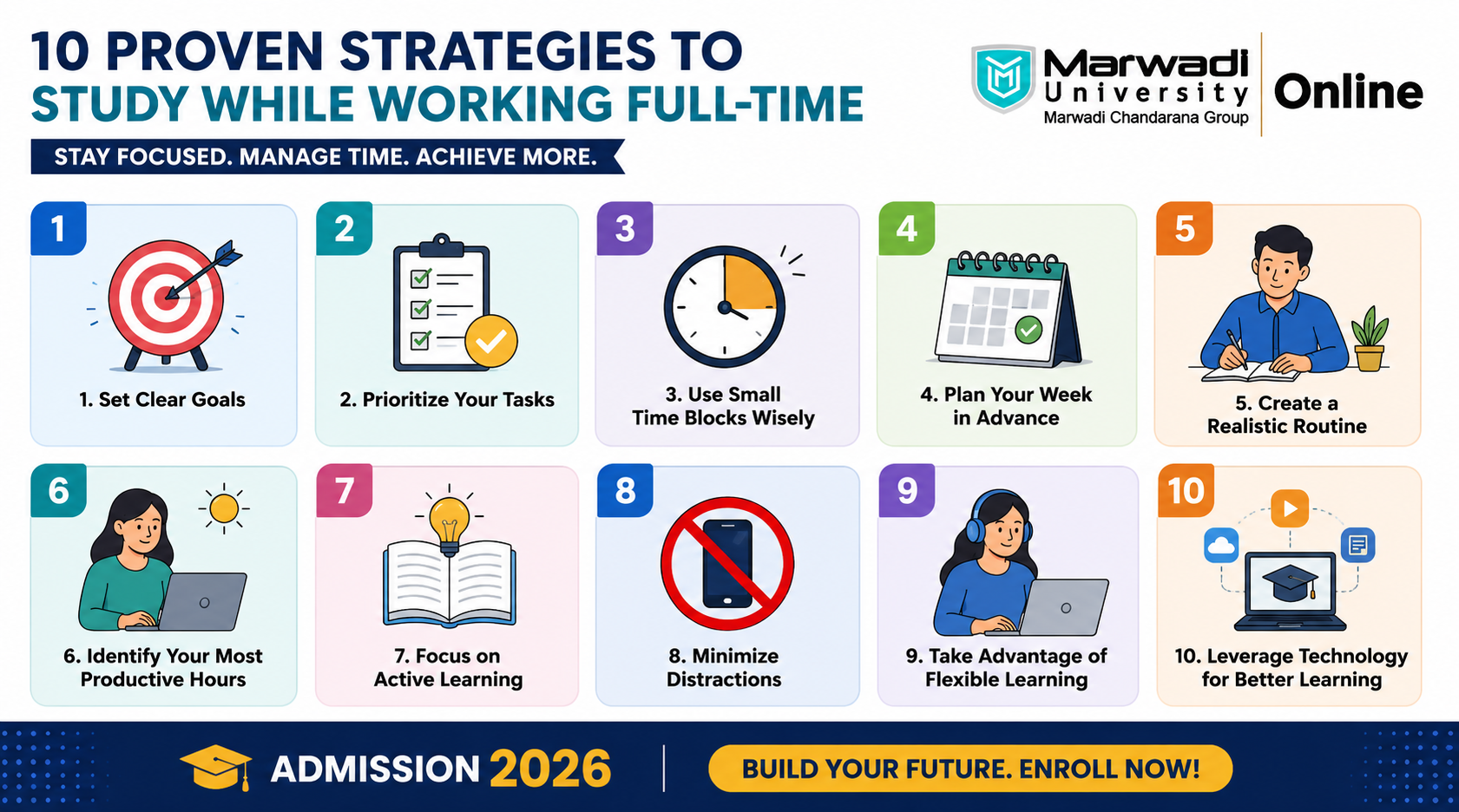
1. Set Clear Goals
Start by defining what you want to achieve through your studies. Your goals could include:
- Earning a degree
- Learning a new skill
- Switching careers
- Qualifying for a promotion
Clear goals help you stay motivated and focused during busy periods.
2. Prioritize Your Tasks
Not every task has the same level of importance. Create daily and weekly priority lists to identify what needs immediate attention.
- Identify urgent work deadlines and important academic assignments.
- Complete high-priority tasks during your most productive hours.
- Break large projects into smaller, manageable tasks.
- Use a to-do list or productivity app to track daily responsibilities.
A practical work study balance for professionals requires focusing on high-impact tasks rather than trying to do everything at once.
Time Management Tips for Working Students
Effective time management for working students is essential for success.
3. Use Small Time Blocks Wisely
You do not always need long study sessions. Use short periods throughout the day to:
- Read study materials
- Watch lecture videos
- Review notes
- Complete quizzes
Even 20-30 minutes of focused study can make a significant difference.
4. Plan Your Week in Advance
Schedule study sessions just like work meetings.
At the beginning of each week:
- Identify available study hours.
- Allocate time for assignments.
- Set deadlines for important tasks.
This approach is one of the most effective tips for studying while working full time.
Creating a Study Schedule for Working Professionals
A structured study schedule for working professionals helps maintain consistency.
5. Create a Realistic Routine
Avoid creating an overly ambitious plan.
For example:
- Monday to Friday: 1-2 hours daily
- Saturday: Assignment work
- Sunday: Revision and planning
Consistency matters more than studying for long hours occasionally.
6. Identify Your Most Productive Hours
Some people learn better early in the morning, while others prefer studying at night.
- Choose a study time when your energy and concentration levels are highest.
- Schedule difficult subjects or assignments during your peak productivity hours.
- Maintain a consistent study time to build a strong learning habit.
- Avoid studying when you are physically tired or mentally exhausted after work.
Studying during your most productive hours can improve focus, increase learning efficiency, and help you make the most of your limited study time.
Best Study Techniques for Busy Professionals
Using the best study techniques for busy professionals can improve learning outcomes while saving time.
7. Focus on Active Learning
Instead of passively reading, try:
- Taking notes
- Creating summaries
- Practicing questions
- Teaching concepts to others
Active learning improves understanding and retention.
8. Minimize Distractions
Create a dedicated study space and turn off unnecessary notifications.
During study sessions:
- Keep your phone away.
- Close unrelated browser tabs.
- Inform family members about your study hours.
Focused learning produces better results in less time.
Benefits of Online Education While Working Full-Time
Many professionals choose an online degree while working full time because of its flexibility.
9. Take Advantage of Flexible Learning
Online education allows learners to:
- Access lectures anytime
- Study from any location
- Learn at their own pace
- Continue earning while studying
This makes online programs ideal as a form of part-time study for full-time employees.
10. Leverage Technology for Better Learning
Use digital tools to stay organized:
- Calendar apps
- Task management tools
- Note-taking apps
- Learning management systems
- AI tools
Technology can simplify your learning journey and improve productivity.
Common Challenges and How to Avoid Burnout
Balancing a full-time job and education can be rewarding, but it also comes with challenges. Many working professionals struggle to manage multiple responsibilities, which can sometimes lead to stress and burnout.
Common challenges include:
- Lack of time for studying and personal commitments.
- Mental fatigue after a long workday.
- Difficulty meeting assignment deadlines.
- Stress caused by balancing multiple priorities.
To avoid burnout:
- Take regular breaks during study sessions.
- Get enough sleep to stay focused and energized.
- Exercise regularly and maintain a healthy diet.
- Set realistic goals and avoid overloading your schedule.
- Celebrate small achievements to stay motivated.
Remember, progress is more important than perfection. Learning is a long-term journey, and consistent effort will help you achieve success without compromising your well-being.
Final Tips for Long-Term Success
Success in balancing work and education is about staying consistent over time. Small, regular efforts often produce better results than occasional intensive study sessions.
Keep these principles in mind:
- Stay committed to your academic and career goals.
- Follow a realistic and consistent study schedule.
- Review your progress regularly and celebrate small achievements.
- Prioritize important tasks and avoid unnecessary distractions.
- Ask for support from family, friends, colleagues, or mentors when needed.
- Remain flexible and adjust your study plan during busy work periods.
- Take care of your physical and mental well-being to avoid burnout.
Most importantly, remember why you started this journey. Every study session, completed assignment, and new skill learned brings you one step closer to achieving your long-term career aspirations and professional growth.
Final Thoughts
Choosing to study while working full time is one of the most rewarding investments you can make in your future. Although balancing professional responsibilities and education can be challenging, the right strategies can help you succeed without sacrificing your well-being.
By setting clear goals, following a structured study schedule, practicing effective time management, and using proven learning techniques, you can steadily progress toward your academic and career objectives. Flexible learning options such as an online degree while working full time have made education more accessible than ever for professionals who want to grow without pausing their careers.
Remember that success does not require studying for endless hours every day. Consistent effort, smart planning, and maintaining a healthy balance between work and studies are what truly matter. Whether you are pursuing a degree, certification, or professional development program, the skills and knowledge you gain today can create better opportunities tomorrow.
If you are determined to study while working full time, stay focused, trust the process, and keep moving forward. Your future self will thank you for the effort you invest today.
FAQs
1. Is it possible to study while working full-time?
Yes. With proper planning, time management, and a consistent study routine, many professionals successfully study while maintaining full-time jobs.
2. How many hours should I study daily while working full-time?
Most working professionals can effectively study for 1–3 hours per day, depending on their schedule and course requirements.
3. What is the best way to balance work and studies?
Creating a realistic schedule, setting priorities, and maintaining clear goals are the best ways to balance work and studies.
4. Is an online degree suitable for working professionals?
Yes. An online degree offers flexibility, allowing professionals to learn at their own pace while continuing their careers.
5. How can I avoid burnout while studying and working?
Take regular breaks, maintain a healthy lifestyle, get enough sleep, and avoid overloading your schedule with unrealistic expectations.