
How to Choose an Online University in India: 10 Mistakes to Avoid in 2026
Choosing an online degree is a major decision because your university can shape your skills, career opportunities, and future study options. Before comparing fees or applying, students need to understand how to choose an online university in India wisely. The right choice is not always the cheapest or most advertised option. You should consider recognition, course quality, student support, flexibility, assessment methods, and career value.
The online university in India 2026 landscape offers many choices, from business and commerce to technology and arts. This gives students more options, but it can also make selection confusing. A university may look attractive online but still fail to match your academic or career needs.
This guide covers ten common mistakes to avoid before applying. Whether you are exploring online degree courses in India after Class 12, planning postgraduate study, or balancing education with work, these checks can help you make a confident and informed decision.
Students often compare university names, fees, and advertisements first, but the smarter approach is to compare the complete learning experience. Checking official recognition, syllabus, support services, assessment rules, and career resources early can prevent expensive mistakes and help you choose a program with confidence and clarity before enrolling.
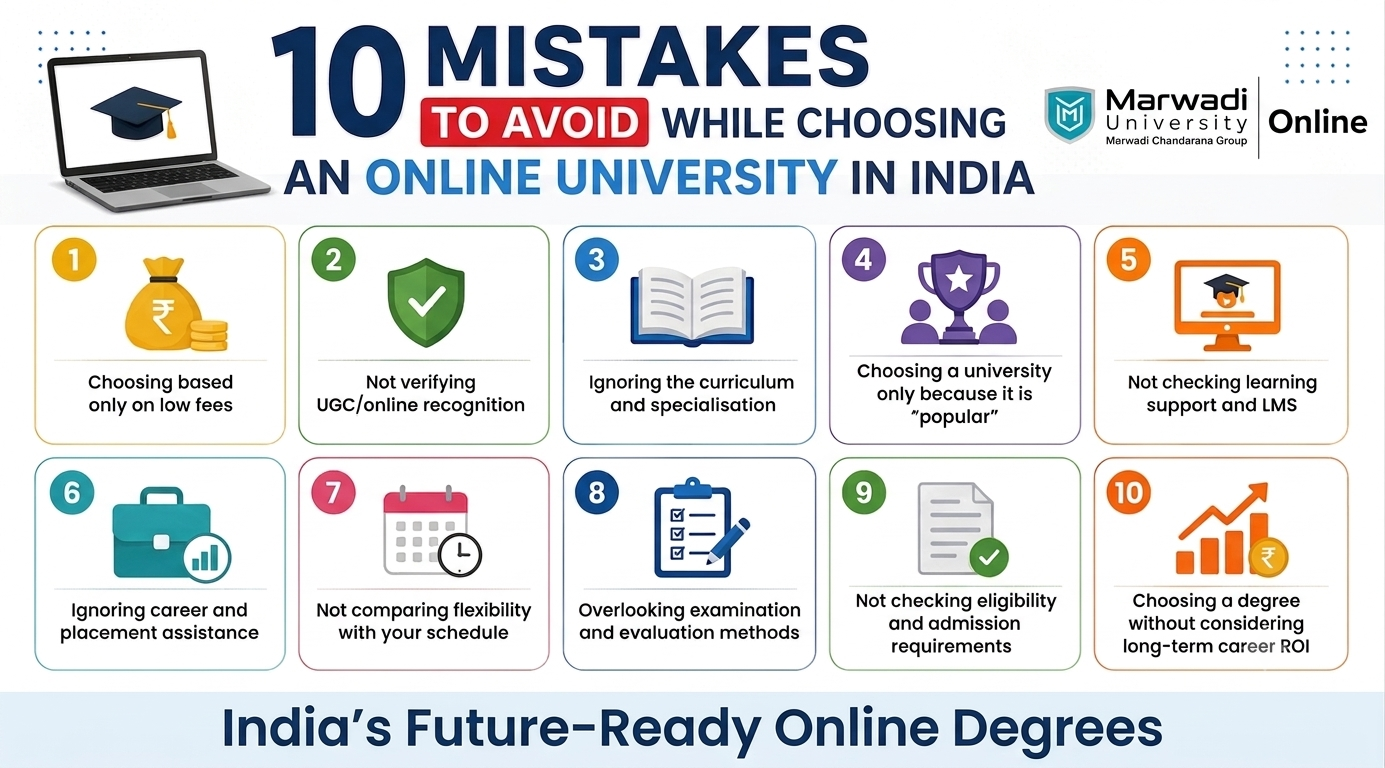
Mistake 1: Choosing Based Only on Low Fees
A low fee may look attractive, but it should never be the main reason you select a university. Very cheap programs may offer limited academic support, fewer learning resources, or a course structure that does not match your goals.
Before comparing prices, check what your fee includes:
- Live or recorded classes
- Study materials
- Examination services
- Academic support
- Career guidance
The goal is value, not simply the lowest number. Compare total fees, payment options, curriculum quality, student services, and career benefits together. A slightly higher investment can make sense when the learning experience and long-term value are stronger before enrolling today.
Mistake 2: Not Verifying UGC/Online Recognition
One of the biggest mistakes is assuming every online degree has the same recognition. Before paying, verify first that the university is a UGC approved online university in India and offers UGC approved online degree courses.
For 2026, check the UGC-DEB portal and the relevant academic-year listing instead of relying only on advertisements. UGC publishes information on institutions and programs for online and ODL offerings.
Also verify the exact program you want, not just the university name. This matters for online degree recognition in India because program status must be checked under the applicable rules. Make recognition your first step.
Mistake 3: Ignoring the Curriculum and Specialisation
A university can have a strong name, but the wrong curriculum can still leave you unprepared for your goals. When comparing online degree courses in India, read the syllabus semester by semester instead of choosing only by the program title.
Check whether the curriculum includes:
- Relevant core subjects
- Practical projects
- Current industry topics
- Useful electives or specialisations
- Skills needed for your target career
Think about what you want after graduation and work backward. A student targeting finance, marketing, data, teaching, or technology may need different subjects. The right course should build knowledge and practical skills that remain useful beyond graduation.
Mistake 4: Choosing a University Only Because It Is “Popular”
Popularity can help, but it should not replace research. A university may appear frequently in advertisements, rankings, social media, or search results and still not be the right fit for your goals.
When comparing options, ask:
- Is the program recognized for online delivery?
- Does the curriculum match my career plan?
- Are faculty and academic resources suitable?
- What learning support is available?
- What do assessments look like?
Instead of searching only for the best online university in India, create your own checklist. A popular university may suit one learner and not another. Your decision should depend on evidence, fit, and needs.
Mistake 5: Not Checking Learning Support and LMS
Online learning gives you flexibility, but it does not mean you should study alone. Before enrolling, explore the university’s learning support and LMS. A good platform should make it easy to access lectures, study materials, assignments, announcements, and academic information.
During your online degree university selection, check:
- Whether the LMS works on mobile and desktop
- Access to recorded content
- Faculty or mentor support
- Technical assistance
- Clear organization of resources
Also look for orientation or onboarding support. These details affect your learning experience. A strong LMS and responsive support system can make online study more structured, manageable, engaging, and effective.
Mistake 6: Ignoring Career and Placement Assistance
A degree can open doors, but students should also ask what support exists between graduation and employment. Do not assume every online university offers the same level of career guidance or placement assistance.
Before admission, check whether the university provides:
- Career counselling
- Resume or interview support
- Industry sessions
- Internship guidance
- Job or placement assistance
- Skill-building opportunities
Career support should not be treated as a guaranteed job. Instead, view it as an ecosystem that can improve employability. Review what the university promises and how it supports students. The best online university in India for your goals should connect education with career development.
Mistake 7: Not Comparing Flexibility With Your Schedule
Flexibility is a major advantage of online education, but every program manages time differently. Before applying, understand the schedule and decide whether it fits your routine, especially if you work, manage family responsibilities, or have other studies.
During online university eligibility and admission research, check:
- Live class timings
- Recorded lecture availability
- Assignment deadlines
- Examination schedules
- Attendance or participation requirements
Do not choose a program simply because it is called “online.” Ask how much real-time participation is expected and how much learning can be completed independently. Compare the academic calendar and study pattern before making an online university admission 2026 decision.
Mistake 8: Overlooking Examination and Evaluation Methods
Many students focus on classes and fees but ignore how they will actually be evaluated. Examination and assessment methods can affect your study routine and overall experience.
Before enrolling, find out:
- How often exams are conducted
- Whether assessments include assignments, projects, or quizzes
- How examinations are delivered and supervised
- How marks are divided
Read the official academic guidelines carefully because assessment systems can vary by university and program. Knowing the process early helps you plan better overall. A clear evaluation structure is an important part of how to choose the right online university because it affects learning habits and academic performance.
Mistake 9: Not Checking Eligibility and Admission Requirements
Do not wait until the application form to check whether you are eligible. Different programs can have different academic requirements, subject conditions, documents, or admission rules.
Before starting your online university admission 2026 application, verify:
- Required qualifications and minimum marks
- Subject requirements, where applicable
- Accepted documents
- Application and admission deadlines
- Program-specific conditions
Use the university’s official admission page for current information. This is important when comparing online university eligibility and admission requirements across institutions. Meeting eligibility rules does not mean a program is suitable for you.
A few minutes spent checking eligibility can save time, money, and application stress later.
Mistake 10: Choosing a Degree Without Considering Long-Term Career ROI
Choosing an online degree is not only about completing the course; it is about what the qualification helps you do next. Before enrolling, think about the value of the degree over time, not just one semester.
Consider:
- Career paths the program can support
- Skills you will gain
- Higher education opportunities
- Industry relevance of the curriculum
- Total cost compared with expected value
Research online degree recognition in India and whether the qualification fits your future plans. Long-term return can include skills, career mobility, confidence, and access to further study. Good online degree university selection connects your interests with a future plan.
Final Thoughts
Choosing an online university deserves more thought than comparing advertisements or fee discounts. The best way to understand how to choose an online university in India is to evaluate the complete student experience: recognition, curriculum, support, flexibility, assessment, career guidance, eligibility, and long-term value.
Start by verifying the university and program through official UGC-DEB information for the relevant admission session. UGC publishes information on institutions and online programs, while its regulatory framework sets conditions for eligible online offerings. Then compare the course structure, learning platform, academic support, examination process, and career services.
Do not let low fees, popularity, or attractive advertising decide for you. First identify what you want to learn, why you want an online degree, and where you want it to take you. This makes comparison easier and keeps your decision focused.
The right university is the one that fits your academic needs, schedule, budget, and career direction. With careful research, you can avoid common mistakes and make a confident choice for your 2026 online education journey. Remember: recognition is essential, but it is only one part of the decision. Course quality, support, flexibility, and career relevance matter just as much for your future career goals.
FAQs
1. How do I choose an online university in India?
Check UGC-DEB status, curriculum, fees, faculty, LMS, flexibility, assessment methods, career support, and eligibility before enrolling.
2. How can I verify an online university’s UGC recognition?
Check the official UGC-DEB portal and verify the university and the specific online program for the relevant academic year.
3. Are online degrees recognized in India?
Yes, online degrees from UGC recognized universities are generally considered equivalent to regular degrees.
4. What should I check before online university admission?
Check eligibility, documents, deadlines, fees, program structure, examination rules, recognition, and available student support.
5. Is an online degree good for career growth?
Yes, an online degree can support career growth when the program is recognized, relevant to your goals, and combined with practical skills and career development.